
Digital Quality Standards
(UX RESEARCH & ENTERPRISE UX)
THE CHALLENGE
The challenge was not defining quality. The challenge was making quality actionable at scale.
As Scania's digital ecosystem expanded, product quality varied across teams, products, and domains. Without a shared language, quality conversations became subjective, difficult to prioritize, and hard to connect to business value.
ORGANIZATIONAL PROBLEM
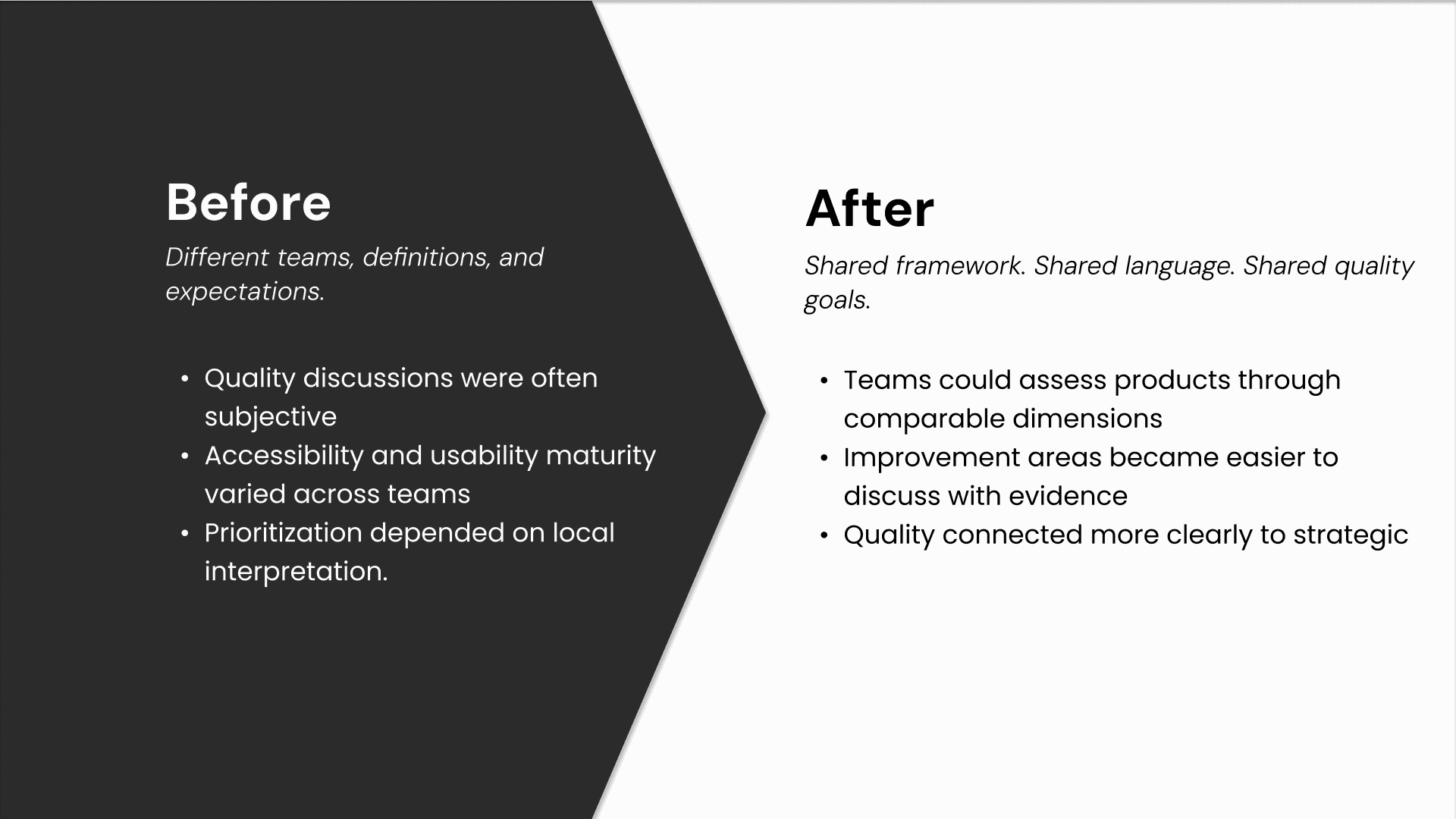
Digital quality varied because teams were not working from the same definition.
The organization needed a way to move discussions about usability, accessibility, performance, consistency, and maintainability out of personal opinion and into a shared operating language.
FRAMEWORK OVERVIEW
The Digital Quality Standards made quality measurable and repeatable.
Digital Quality Standards (DQS) evaluates products across five dimensions: usability, brand identity, performance, security, and interconnectivity. Each standard includes assessment statements that help teams understand product quality and maturity.
MY ROLE
I did not create the original framework. I helped make it work inside the organization.
My responsibility was to evolve, operationalize, and scale DQS so it could support product teams, leaders, and strategic quality conversations across the enterprise.

ADOPTION STRATEGY
Rolling out a framework required an adoption system.
Documentation alone would not change team and product behaviors. The work I set out to do also needed leadership sponsorship, prioritized rollout, team enablement, and a clear reason for product teams to act.
Making quality actionable
Adoption required a deliberate operating model, not more documentation. This meant I approached the adoption both through a bottom up approach directly with operational teams and products, as well as a top down approach to higher management and strategical discussions and presentations.
PRODUCT ASSESSMENT
The framework became tangible when it met real products.
I helped teams apply DQS across several product domains including e-commerce, production systems, data analytics, websites, and physical products.
These assessments included several different products where I conducted usability tests, expert reviews, workshop facilitation to help team identify how to improve their products. Below are some examples of the products I helped assess and evaluate.

BUSINESS IMPACT
UX quality had to be translated into business outcomes.
While assessments helped team align on their products challenges, I also drove research in finding how digital quality had a correlation to business impacts. This included efficiency, lower support cost, faster onboarding, operational clarity, and overall better customer experiences.

ORGANISATIONAL OUTCOMES
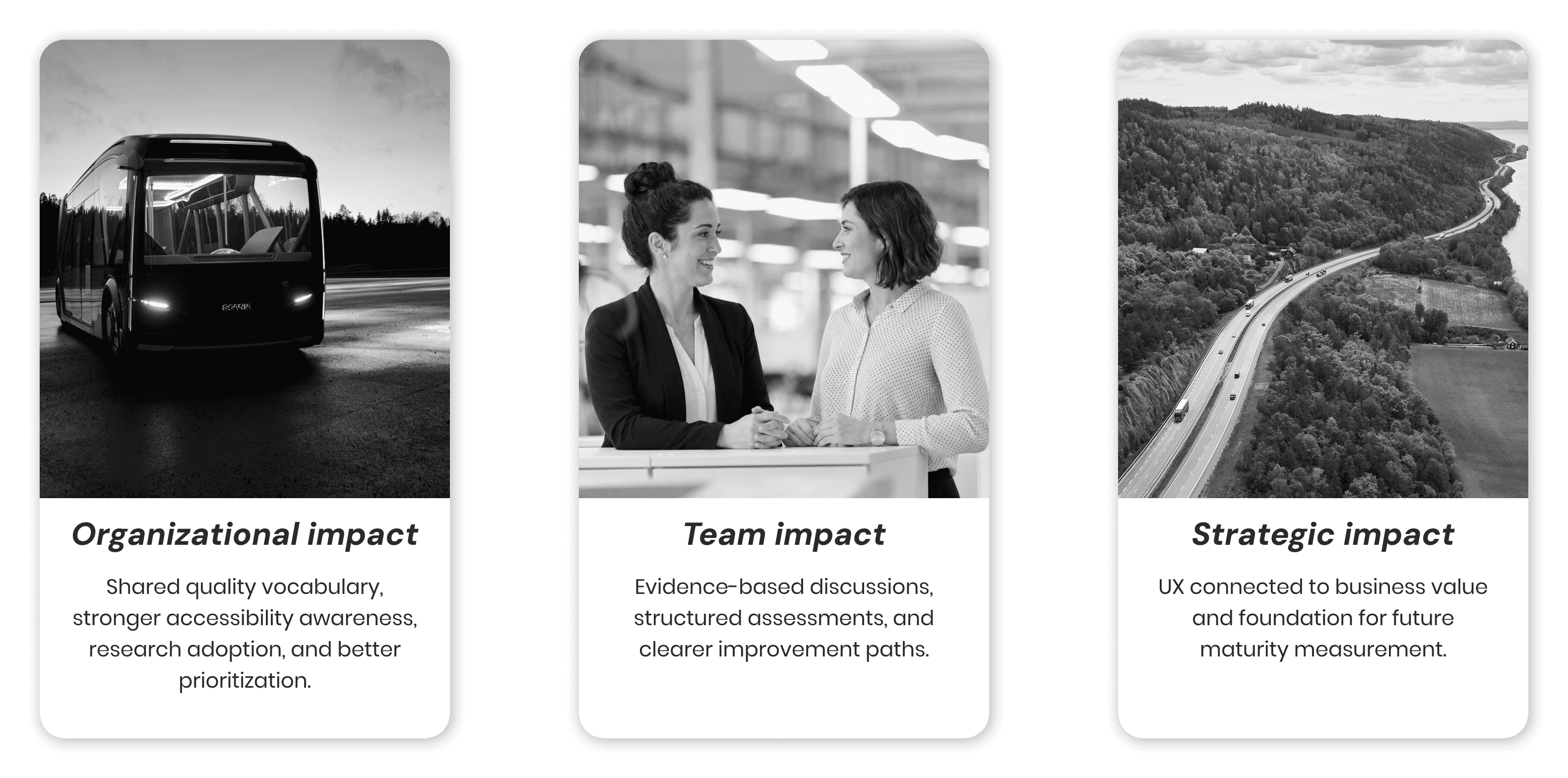
The work created a shared quality language across the organization
The impact I created was visible at several levels: organizational alignment, team-level quality discussions, and strategic UX maturity.
REFLECTION
Designing good experiences matters. Designing systems that help organizations produce good experiences creates larger impact.
The strongest design contribution was not a new interface. It was helping Scania develop a shared way to recognize, discuss, prioritize, and improve digital quality at scale.
This work changed how I think about UX influence. A framework alone does not improve quality. Adoption, alignment, and local ownership drive improvement.
More Projects

A/B Testing
(A/B TESTING & USER INTERVIEWS)
How comparative usability testing helped guide a global procurement decision for a new Master Data platform.

Experience Hub
(WEB DESIGN & UX RESEARCH)
Research revealed that Experience Hub was trying to solve two competing problems. My UX work clarified the product purpose and helped shift the direction toward a digital expression of Scania's premium experience.
