A/B Testing
(A/B TESTING & USER INTERVIEWS)
CHALLENGE
The decision would shape critical workflows for years.
Scania was evaluating two Master Data Management (MDM) systems as part of a large-scale procurement initiative supporting global invoicing and customer data management. Both systems satisfied technical requirements, but stakeholders needed confidence in how each platform would perform in real operational context.

RESEARCH APPROACH
The study combined first-time usability evidence with expert evaluation.
My research was designed to compare how both systems performed during realistic tasks while also explaining why specific issues occurred.
I contributed by translating research evidence into decision criteria across the following areas.

MY QUANTITATIVE FINDINGS
The results seemed obvious.
System B performed dramatically better in the test. If the decision were based only on first-time usability, the research appeared to point in one direction.
BEHAVIOURAL FINDINGS
The data showed who won. The sessions showed why.
Participants struggled most when the interface failed to expose where workflows lived, what terminology meant, or how search behavior should be interpreted. These issues created trial-and-error patterns and lowered confidence.

HEURISTIC EVALUATION
The expert review explained the behavioral patterns.
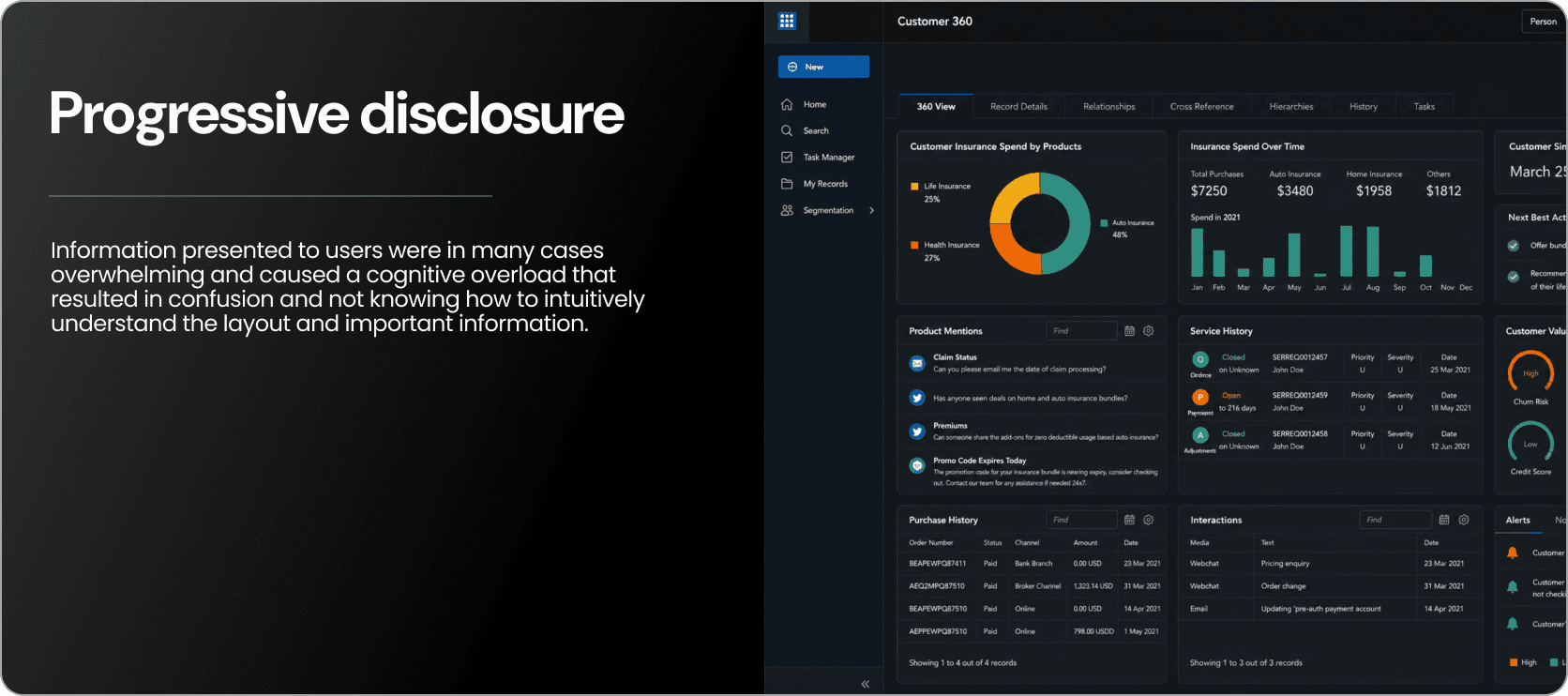
The usability testing I conducted identified what participants experienced. The heuristic reviews I added helped explain why the problems were happening. Below are some examples of the findings.




STRATEGIC INSIGHT
The most usable system did not win.
At first glance, the decision appeared straightforward. System B achieved dramatically higher usability scores. However, stakeholder discussions revealed a more important question.
Not only: Which system is easiest to use?
But also: Which system creates the best long-term enterprise fit?
ENTERPRISE TRADEOFFS
The decision moved from usability ranking to operational fit.
Many of System A's usability issues were tied to configuration choices rather than platform limitations. That changed how stakeholders interpreted my findings.

OUTCOME
Research created the foundation for a more informed decision.
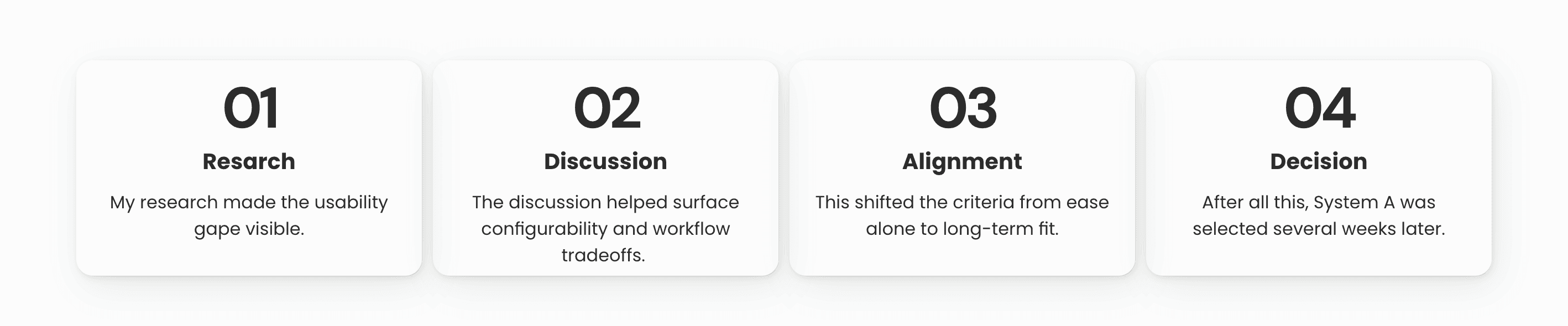
With this project, I helped stakeholders reduce procurement uncertainty, challenge assumptions, understand tradeoffs, and align around decision criteria. Several weeks later, System A was selected.
REFLECTION
High usability does not automatically equal long-term organizational fit.
Usability metrics alone are not enough. Metrics clarified the first-time experience, but not the full enterprise decision.
Enterprise UX requires different evaluation models. Strategic fit depends on workflows, governance, scale, and configurability.
Configuration quality directly impacts experience. Some usability issues reflected implementation choices, not platform limits.
Research also means educating stakeholders. The work helped stakeholders interpret evidence without reducing it to a score.
More Projects

Experience Hub
(WEB DESIGN & UX RESEARCH)
Research revealed that Experience Hub was trying to solve two competing problems. My UX work clarified the product purpose and helped shift the direction toward a digital expression of Scania's premium experience.

MW Hallen
(PRODUCT DESIGN & USABILITY TESTING)
How a dual-screen installation for Scania became a study in attention, behavior, ergonomics, and shared interaction across physical space.
